
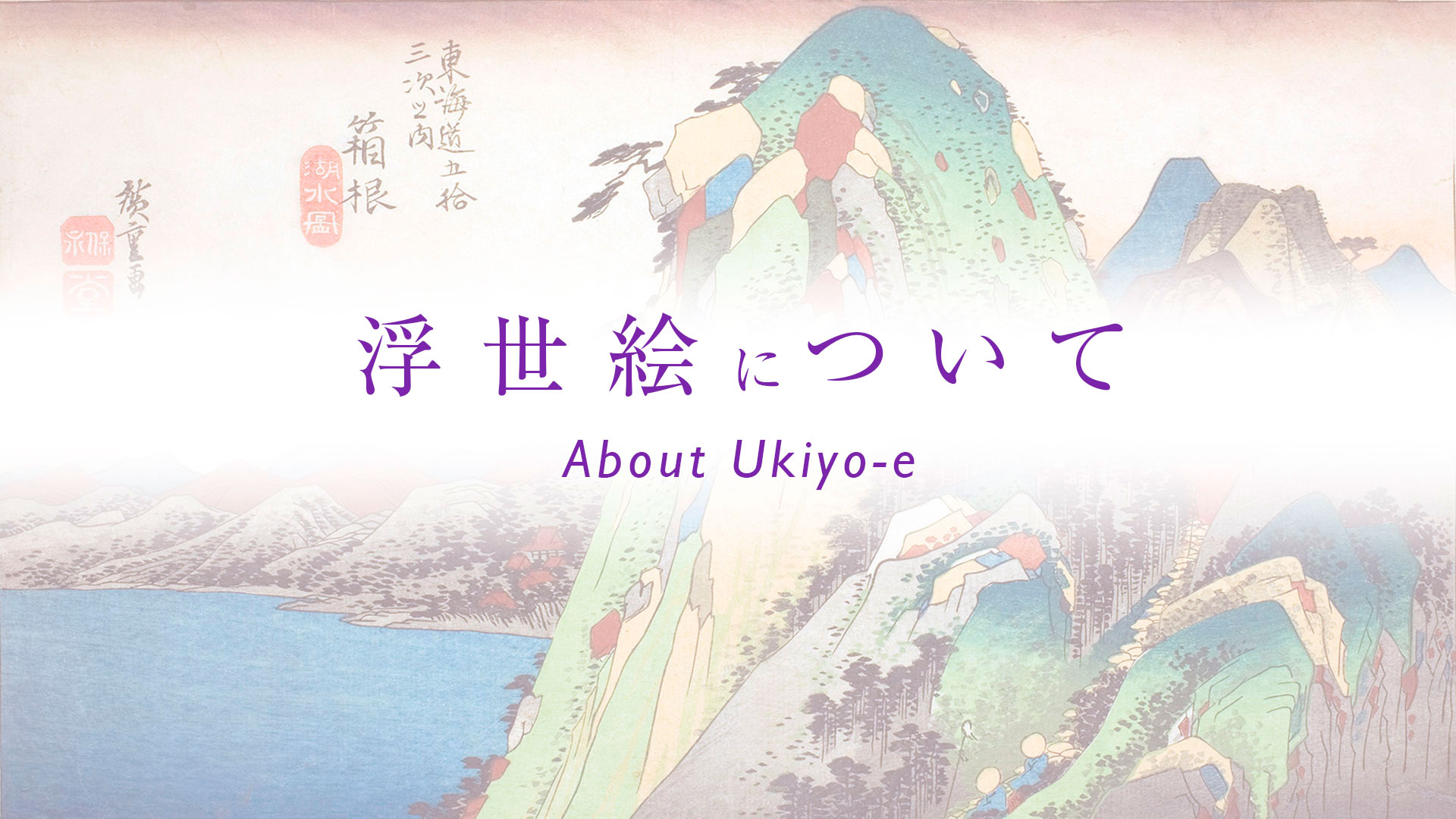
About Ukiyoe
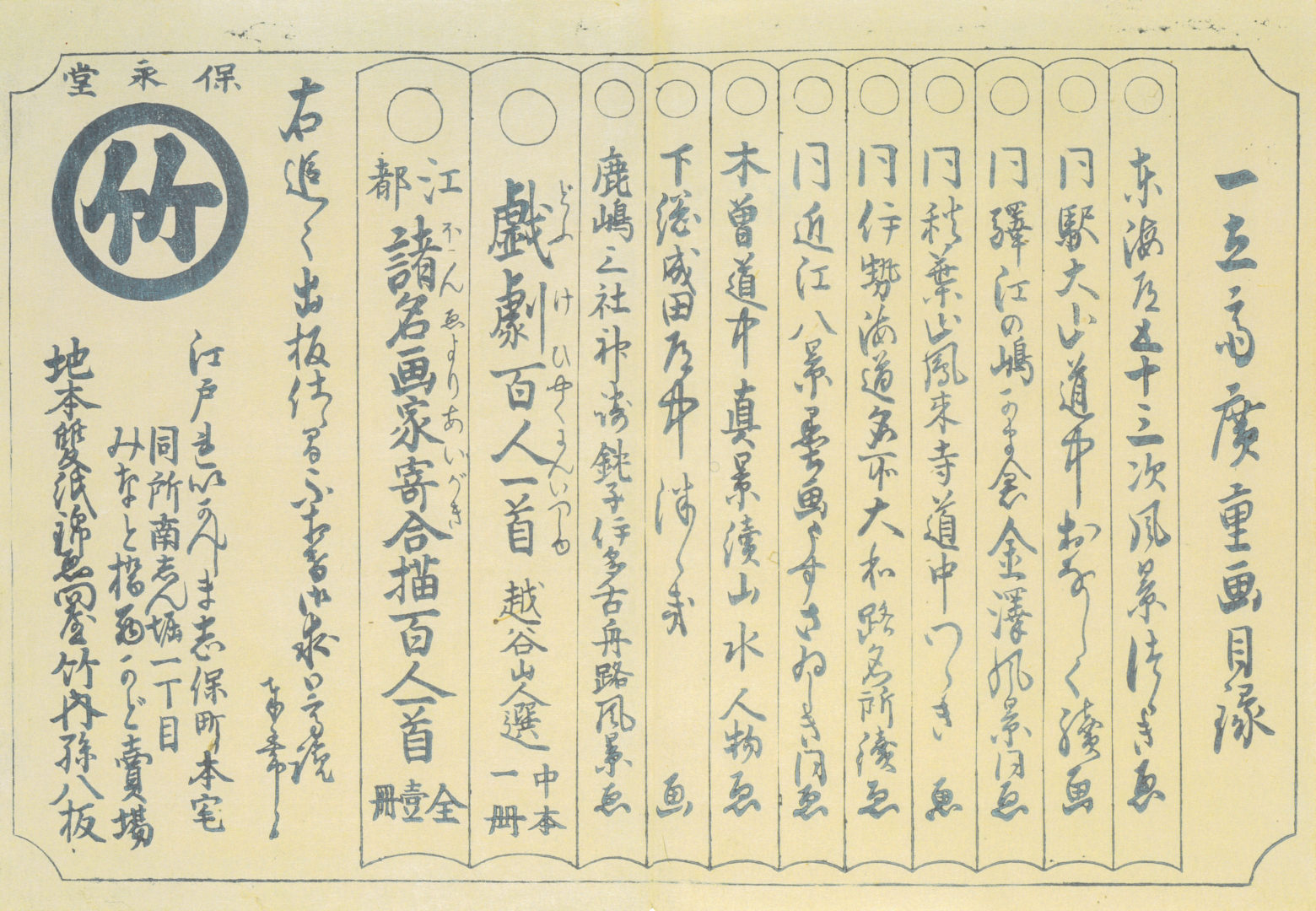
五拾三次が出版されたときの広告 Advertisement for the publication of “Fifty-Three Stages of the Tokaido”
■東海道五拾三次の浮世絵について。
歌川廣重は、1798年に、安藤源右衛門の長男、徳太郎として生まれました。15歳の頃、歌川豊広に入門し、翌年「廣重」の雅号を与えられます。廣重は当初、定火消同心を本業としながら、美人画や役者絵、挿絵、摺物版画などを中心に制作していました。その後、歌川派としては20年近く鳴かず飛ばずの時代を過していましたが、36歳のときに家職を譲り、本格的に画業に専念します。
この年1834年(天保5年)に廣重は保永堂から、「東海道五拾三次の内」と名付けて、旅行ものの浮世絵シリーズを出版し始め評判を得ます。53宿に始まりの日本橋と最後の京都を加えて55枚の大判シリーズとしました。実寸は今のA4版ぐらいの大きさで、当時としてはかなり大きな出版物でした。
廣重はさらに、宿場名の他に副題をつけてその場所の名所風景とし、あたかもその場所に行ったような気持ちになる演出もしていました。
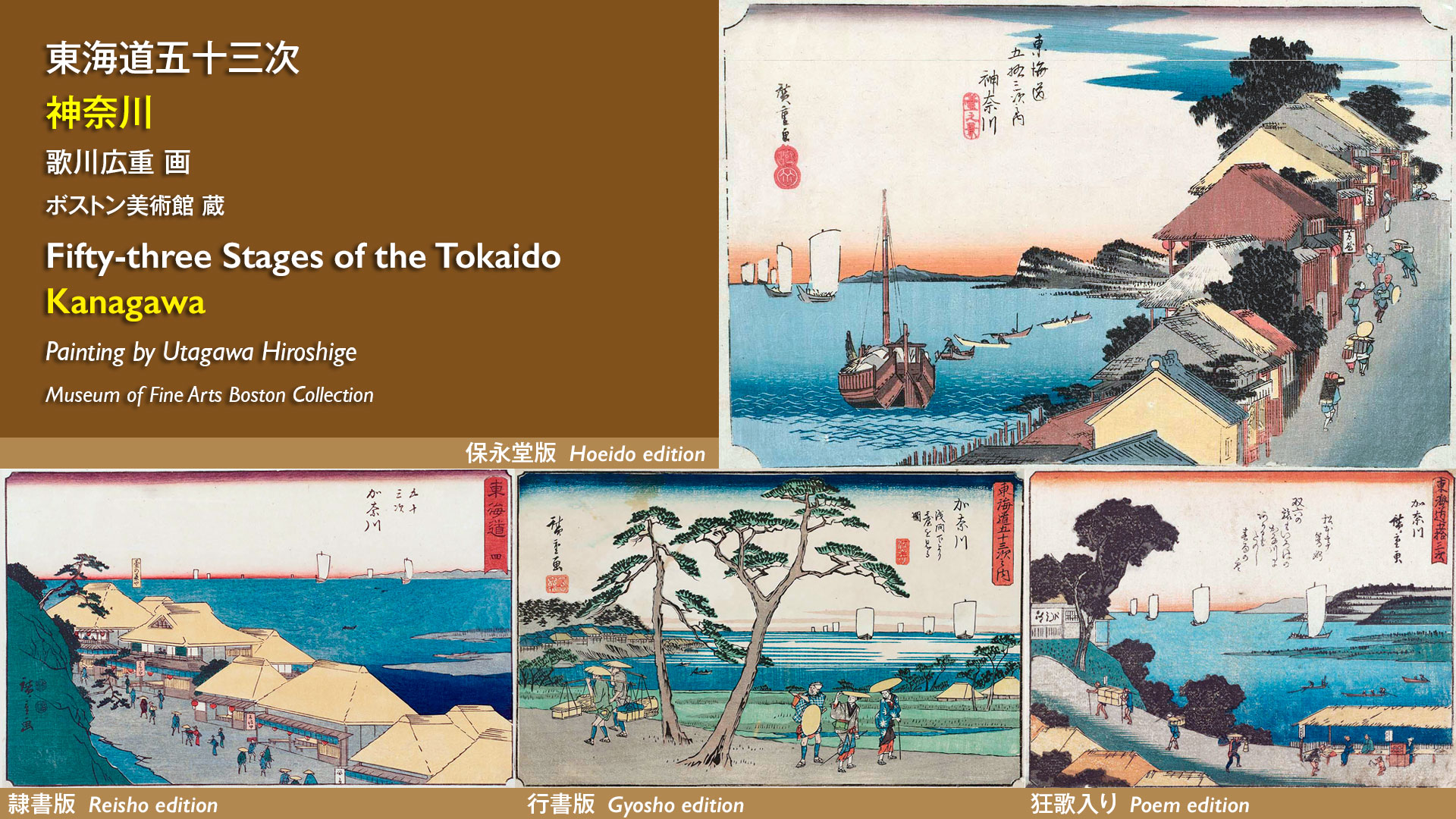
また、廣重のこのシリーズがあまりに好評だったため、後に違う版元から、隷書版、行書版、狂歌入りなど、数多くの東海道ものを出版していました。ですので、同じ宿場名でも風景の違うものが多数存在します。
■Ukiyoe of the Fifty-three Stages of the Tokaido.
Utagawa Hiroshige was born in 1798 as Tokutaro, the eldest son of Ando Genemon. At around age 15, he became a disciple of Utagawa Toyohiro and was given the artistic name “Hiroshige” the following year. Initially, Hiroshige worked as a firefighter while primarily creating beauty paintings, actor prints, illustrations, and surimono prints. After nearly 20 years of obscurity within the Utagawa school, he relinquished his family duties at age 36 to devote himself fully to painting.
In this year, 1834 (Tenpo 5), Hiroshige began publishing a series of travel-themed ukiyo-e prints titled “Fifty-Three Stages of the Tokaido” through Hoeido, gaining acclaim. 53 inns, plus Nihonbashi (the beginning) and Kyoto (the end), were included in the series of 55 large-format prints. The actual size of the series was about the size of today’s A4 paper, which was quite large for the time.
In addition to the name of the inns, Hiroshige also added subtopics to describe the famous sights of each place, making the viewer feel as if he or she had visited the place.
The popularity of this series was so great that Hiroshige later published a number of other editions of Tokaido-Mono, including a clerical Reisho edition, Gosho edition, and Poem edition with a kyoka poem.Therefore, even for the same relay station name, paintings depicting different landscapes exist.
■「東海道もの」ブーム。
廣重が東海道五拾三次を出版する前から、菱川師宣や葛飾北斎、廣重の師匠である歌川豊広などの手により、東海道を紹介する本や浮世絵などが出版されていました。しかし、廣重の描いた東海道五拾三次が大きく成功したことから、東海道を紹介する様々なものが、一つのブームとなっていました。たくさんの絵師の手により、浮世絵のみならず千社札、団扇絵、絵封筒、絵本などさまざまなカタチで出版され、東海道の宿や景観などを描いたものが「東海道(もの)」や「五拾三次(もの)」と呼ばれていました。
55枚揃っていないものも含めると、浮世絵だけでも22種類ほど確認されています。
■The Tokaido-mono Boom.
Even before Hiroshige published his Fifty-three Stations of the Tokaido, books and ukiyo-e introducing the Tokaido had been published by artists such as Hishikawa Moronobu, Katsushika Hokusai, and Hiroshige’s own teacher, Utagawa Toyohiro. However, the great success of Hiroshige’s Fifty-three Stations of the Tokaido sparked a boom in various works introducing the Tokaido. Numerous artists produced not only ukiyo-e prints but also senjafuda, uchiwa-e (fan paintings), illustrated envelopes, picture books, and other forms depicting Tokaido inns and landscapes. These were collectively called “Tokaido-mono” or “Fifty-Three Stations-mono”.
Including sets that are not complete with all 55 prints, around 22 distinct types of ukiyo-e alone have been confirmed.