
■廣重以前の主な東海道もの
廣重が東海道五十三次を出版する以前からあった「東海道もの」、いわゆる東海道を紹介した主だったものを時系列で紹介します。
■Major Tokaido-mono Before Hiroshige
Here we chronologically introduce the major “Tokaido-mono,” or works introducing the Tokaido, that existed before Hiroshige published his Fifty-three Stages of the Tokaido.
- 旅案内 東海道名所図会 Travel Guide Tokaido Meisho-Zue
- 師宣 東海道文間絵図 Moronobu Tokaido Bunken-ezu
- 歌麿 美人一代五十三次 Utamaro Bijin Ichidai 53tsugi
- 滑稽本 東海道中膝栗毛 Comic Book Tokaidochu Hizakurige
- 北斎 東海道五十三次 Hokusai 53 Stations of the Tokaido
- 北斎 春興五十三駄之内 Shunkyo 53 Stations
- 北斎 絵本駅路鈴 Hokusai Ekiro no suzu
- 豊広 東海道五十三次 Toyohiro 53 Stations of the Tokaido
旅案内 東海道名所図会 Travel Guide Tokaido Meisho-Zue
東海道名所図会
1797年
北尾政美ほか10名 画
秋里籬島 著
国立国会図書館 蔵
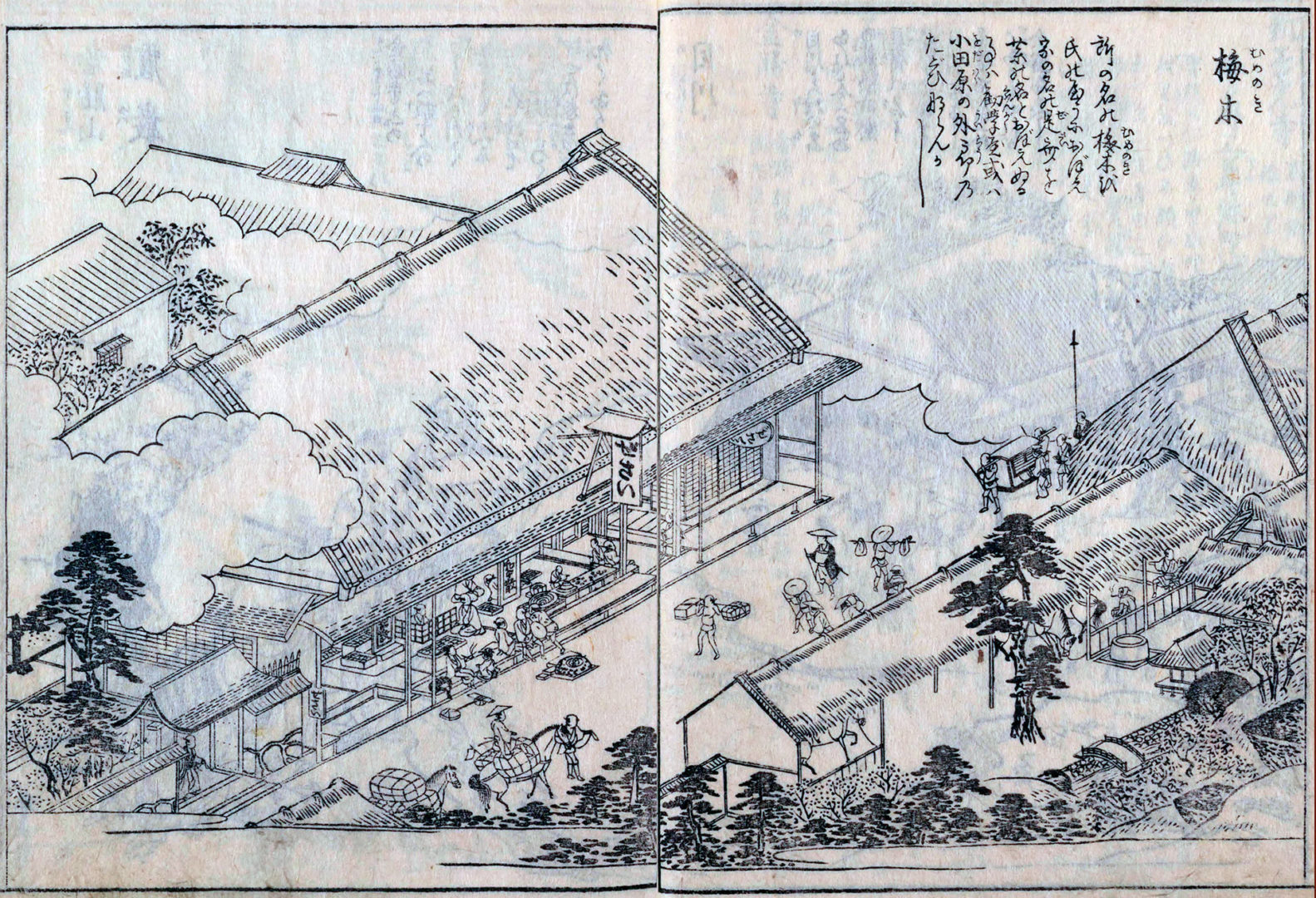
京都三条大橋から江戸日本橋までの東海道沿いの名所旧跡や宿場の様子、特産物などに加えて歴史や伝説などをモノクロで描いたもので、全六巻から構成されています。秋里籬島は、これ以外に江戸名所図會など様々な名所図會シリーズを作っています。廣重の五十三次は、ここから得たインスピレーションがかなり多用されたとされています。
Tokaido Meisho-Zue
(The Famous Place and Scenic Views of the Tokaido)
1797
Painted by Kitao Masami and 10 others
Written by Akisato Rito
National Diet Library Collection
This six-volume series depicts in monochrome the famous sites, historic ruins, post stations, local specialties, and accompanying history and legends along the Tokaido from Kyoto’s Sanjo Ohashi Bridge to Edo’s Nihonbashi Bridge. Akisato Rito also created various other “Meisho Zue” series, such as the Edo Meisho Zue. Hiroshige’s Fifty-three Stations of the Tokaido is said to have drawn considerable inspiration from this work.
師宣 東海道文間絵図 Moronobu Tokaido Bunken-ezu
東海道文間絵図
1690年
遠近道印(おちこちどういん) 作
菱川師宣 画
版木屋七郎兵衛 刊
東京国立博物館蔵
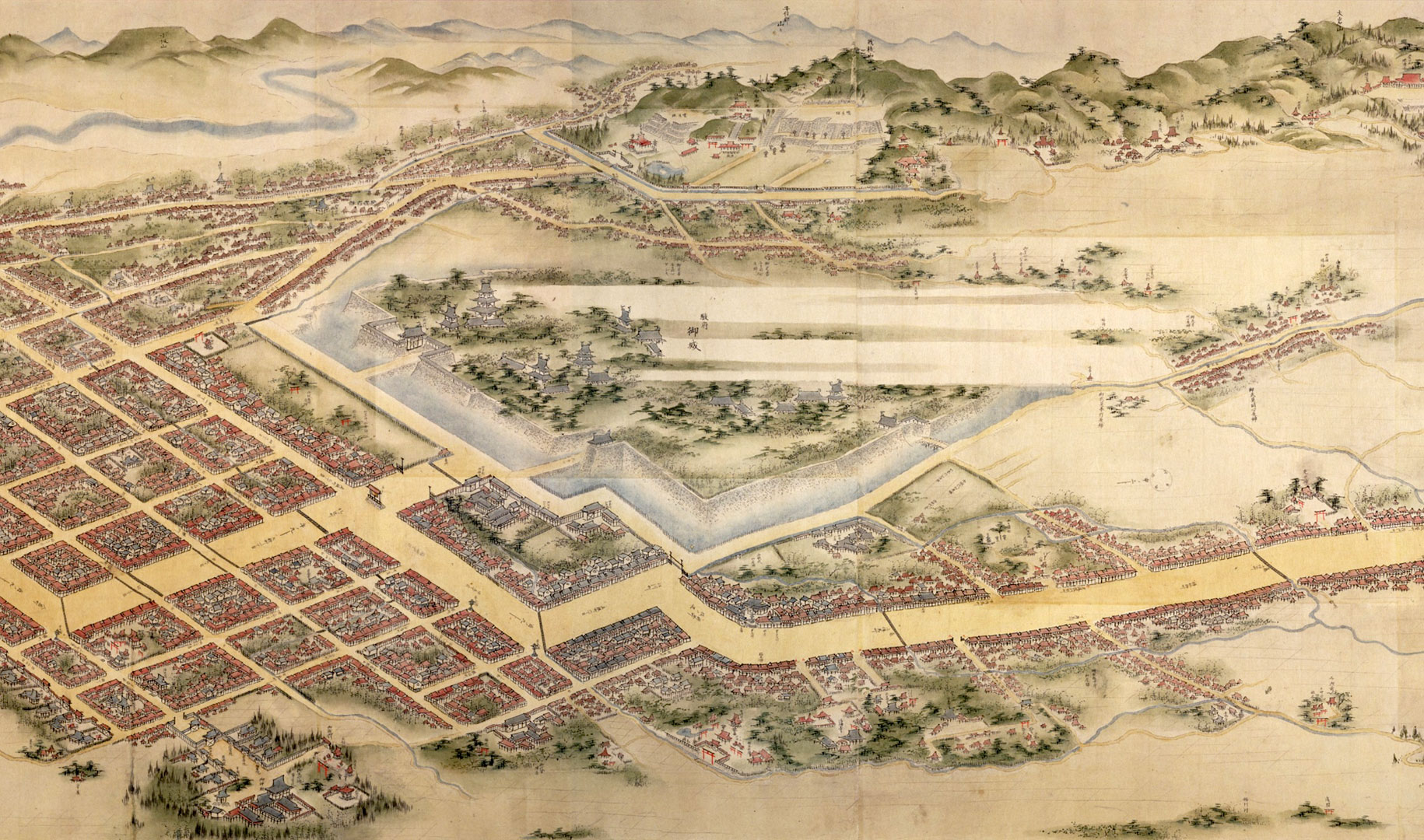
江戸から京都までの様子を、折り本5帳にまとめたものが流通していましたが、オリジナルは肉筆で彩色が施され、1本の太い巻物に仕立てられていました。大きく強調された街道の屈曲状況や両側の風景はもちろん家並みや寺社、街道に現れる様々なものなどに加えて、街道を行き来する人や馬が、実に丹念に描かれています。これは菱川師宣の筆に依るところがとても大きく、さらに要所要所に方位や距離・枝道を書き込んで旅の絵地図としての利便性もすばらしいものがありました。
Tokaido Bunken-ezu
1690
By Ochikochi Doin
Painted by Hishikawa Moronobu
Published by Hangiya Shichirobei
Tokyo National Museum Collection
While folded booklets in five volumes depicting the route from Edo to Kyoto were in circulation, the original was hand-painted and colored, bound as a single thick scroll. The map meticulously depicts not only the dramatically emphasized twists and turns of the road and the scenery on both sides, but also the rows of houses, temples and shrines, various objects appearing along the road, and the people and horses traveling the Tokaido. This is largely due to Hishikawa Moronobu’s brushwork. Furthermore, the inclusion of directions, distances, and branch roads at key points made it an exceptionally useful pictorial map for travelers.
歌麿 美人一代五十三次 Utamaro Bijin Ichidai 53tsugi
美人一代五十三次
平塚
1801-1808年
喜多川歌麿 画
ボストン美術館 蔵
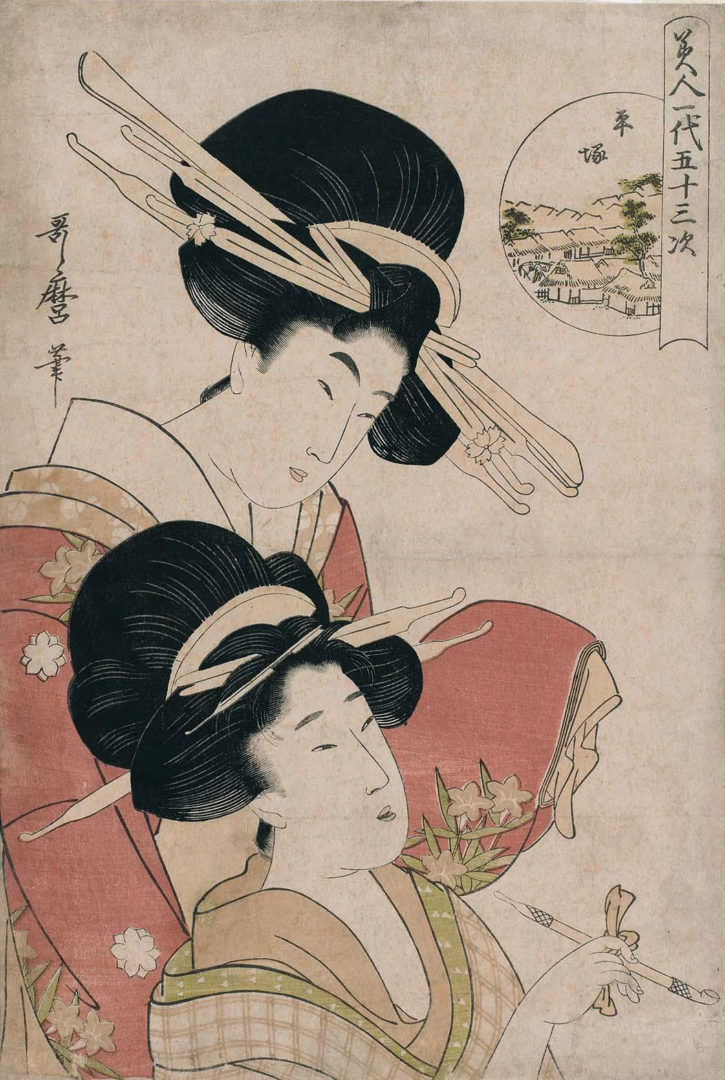
風景画は上の方に小さく描かれているものの、ほぼ歌麿得意な美人画を二人ずつ紹介しているような構成になっています。五十三次と銘打ってはいますが、歌麿の美人画を売るための、旅ブームの時流に乗って、五十三次を冠した画だったようです。
Bijin Ichidai Gojusantsugi
(Fifty-Three Stations of Beautiful woman lifetime)
Hiratsuka
1801-1808
Painted by Kitagawa Utamaro
Museum of Fine Arts Boston Collection
Although a landscape is depicted small at the top, the composition is largely structured to introduce pairs of Utamaro’s signature beauty paintings. While titled the Fifty-Three Stations, it seems this series was created to capitalize on the travel boom and sell Utamaro’s beauty paintings, simply borrowing the name “Fifty-Three Stations.”
滑稽本 東海道中膝栗毛 Comic Book Tokaidochu Hizakurige
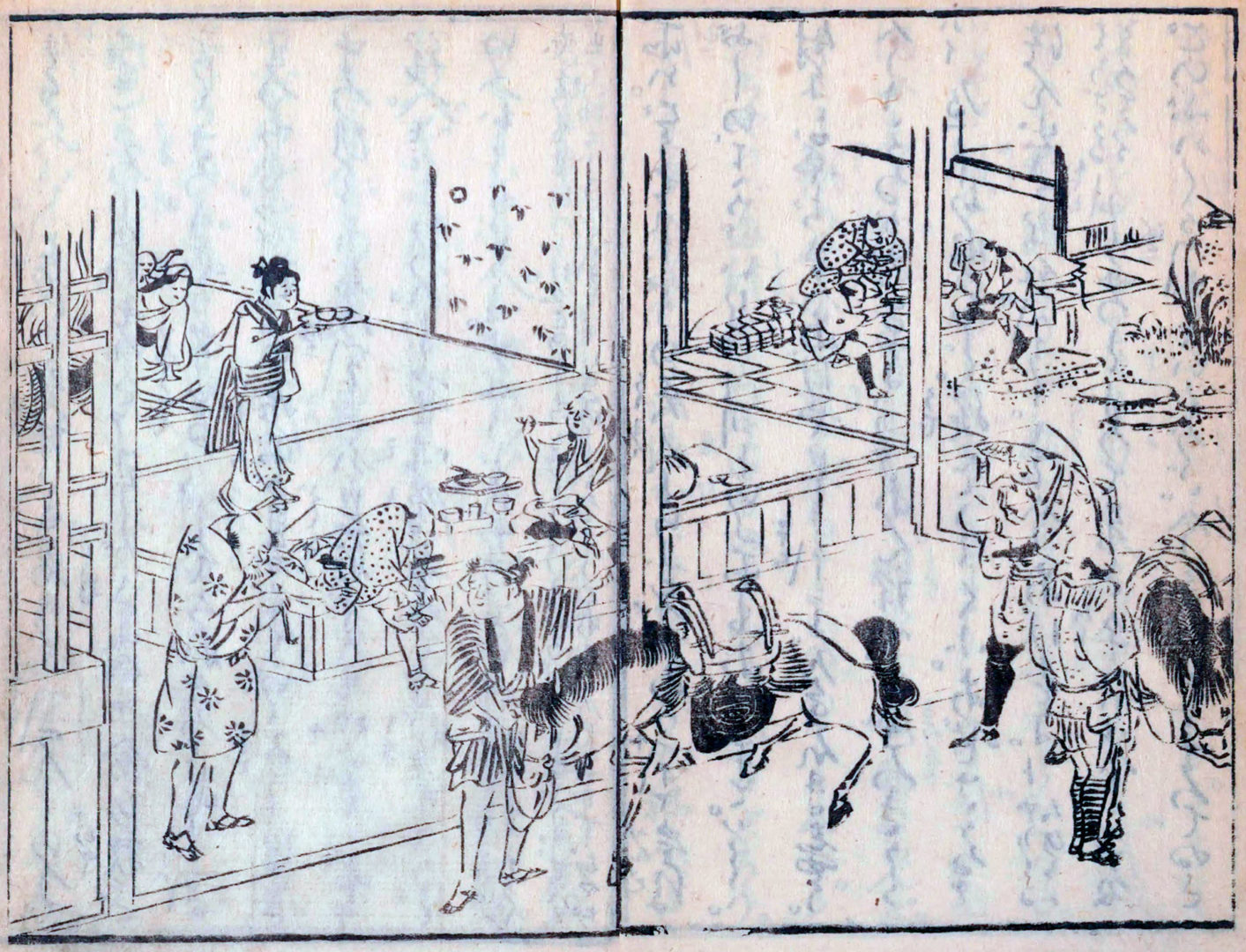
東海道中膝栗毛
8編続12編
1802-1822年
十返舎一九 作・画
村田屋治郎兵衛 ほか3名刊
国立国会図書館 蔵
名物紹介に終始していた従来の紀行物と違い、弥次郎兵衛と喜多八による旅先での失敗談や庶民の生活・文化を描いた本書は絶大な人気を博し、続編や木曽街道、金比羅詣なども含めて、1802年からおおよそ21年にわたり、20編を超える大作になりました。売れるにしたがって、口絵には、歌川豊国、葛飾北斎、渓斎英泉などが採用されました。
Tokaidochu Hizakurige
8 volumes in a series of 12
1802-1822
Written and illustrated by Jippensha Ikku
Published by Murata-ya Jirobee and 3 others
National Diet Library Collection
Unlike conventional travelogues that focused solely on introducing local specialties, this book became immensely popular for depicting the misadventures of Yajirobee and Kitahachi during their travels, along with the daily lives and culture of common people. Including sequels, works on the Kiso Road, and pilgrimages to Konpira, it grew into a monumental series of over 20 volumes spanning roughly 21 years from 1802. As sales soared, frontispieces by artists like Utagawa Toyokuni, Katsushika Hokusai, and Keisai Eisen were featured.
北斎 東海道五十三次 Hokusai 53 Stations of the Tokaido
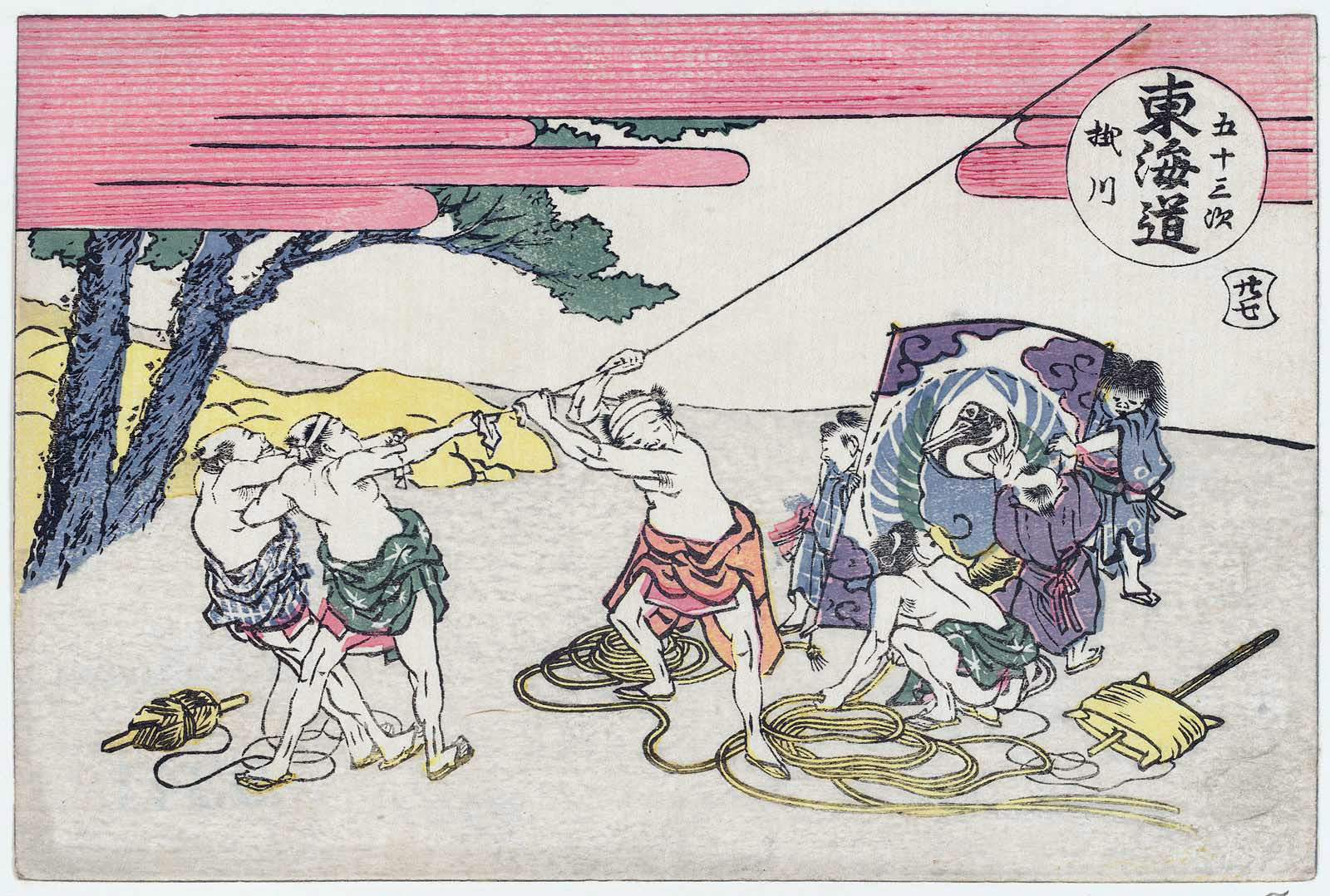
東海道五十三次
掛川
1802
葛飾北斎 画
ボストン美術館
葛飾北斎42歳頃に刊行されたもので、東海道の名所や名物、風物、祭などをピンクの霞雲とともに描いています。実際にありそうな景色やものを中心に描いていて、京都だけが二枚ある、56枚のシリーズとなっています。北斎は、7つの東海道ものを手がけていますが、版元は不明ですが、これが一番最初ではないかといわれています。
Fifty-Three Stations of the Tokaido
Kakegawa
1802
Painting by Katsushika Hokusai
Museum of Fine Arts Boston Collection
Published around the time Hokusai was 42 years old, this work depicts famous sites, local specialties, seasonal scenes, and festivals along the Tokaido, rendered with pink misty clouds. Focusing on scenes and objects that seem plausible, it is a series of 56 prints, with only two prints dedicated to Kyoto. Hokusai produced seven works on the Tokaido-mono, and while the publisher is unknown, this is thought to be the very first.
北斎 春興五十三駄之内 Shunkyo 53 Stations
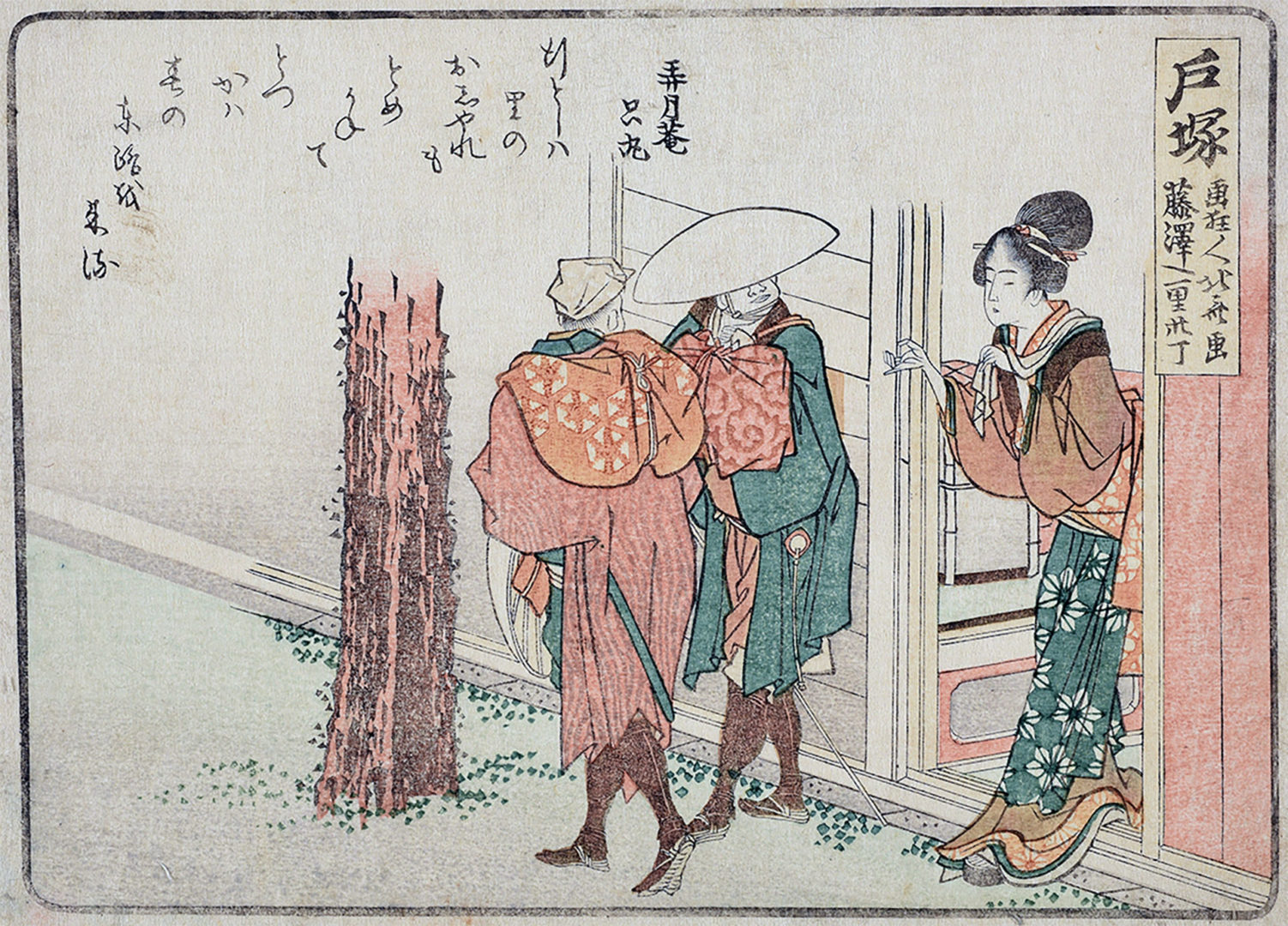
春興五十三駄之内
戸塚
1804-1818年
葛飾北斎 画
ボストン美術館
新年に俳諧の会を開き、句を印刷して贈答した摺物です。これに複数の狂歌連が出資して、東海道五十三次を題材に狂歌を添え、北斎が描いた全59図の作品となりました。細密な彫りと摺りが特徴ですが、後に狂歌部分を削り、一般向けに小判サイズでも出版されました。その土地の風俗を描いたものが多く、小さくて、手にとってじっくり眺めたくなるようなかわいらしいものばかりで、人気を得ました。
Shunkyo Fifty-three Stations
Totsuka
1804-1818
Painting by Katsushika Hokusai
Museum of Fine Arts Boston Collection
This is a printed work created for a New Year’s haikai poetry gathering, where verses were printed and presented as gifts. Multiple kyoka poets contributed funds to expand it into a complete work of 59 prints, featuring Hokusai’s illustrations paired with kyoka poems based on the Fifty-Three Stations of the Tokaido. Characterized by its meticulous carving and printing, it was later published in a smaller, mini size for the general public after the kyoka sections were removed. Many depicted local customs; small and charming, they were perfect for picking up and examining closely, gaining popularity.
北斎 絵本駅路鈴 Hokusai Ekiro no suzu
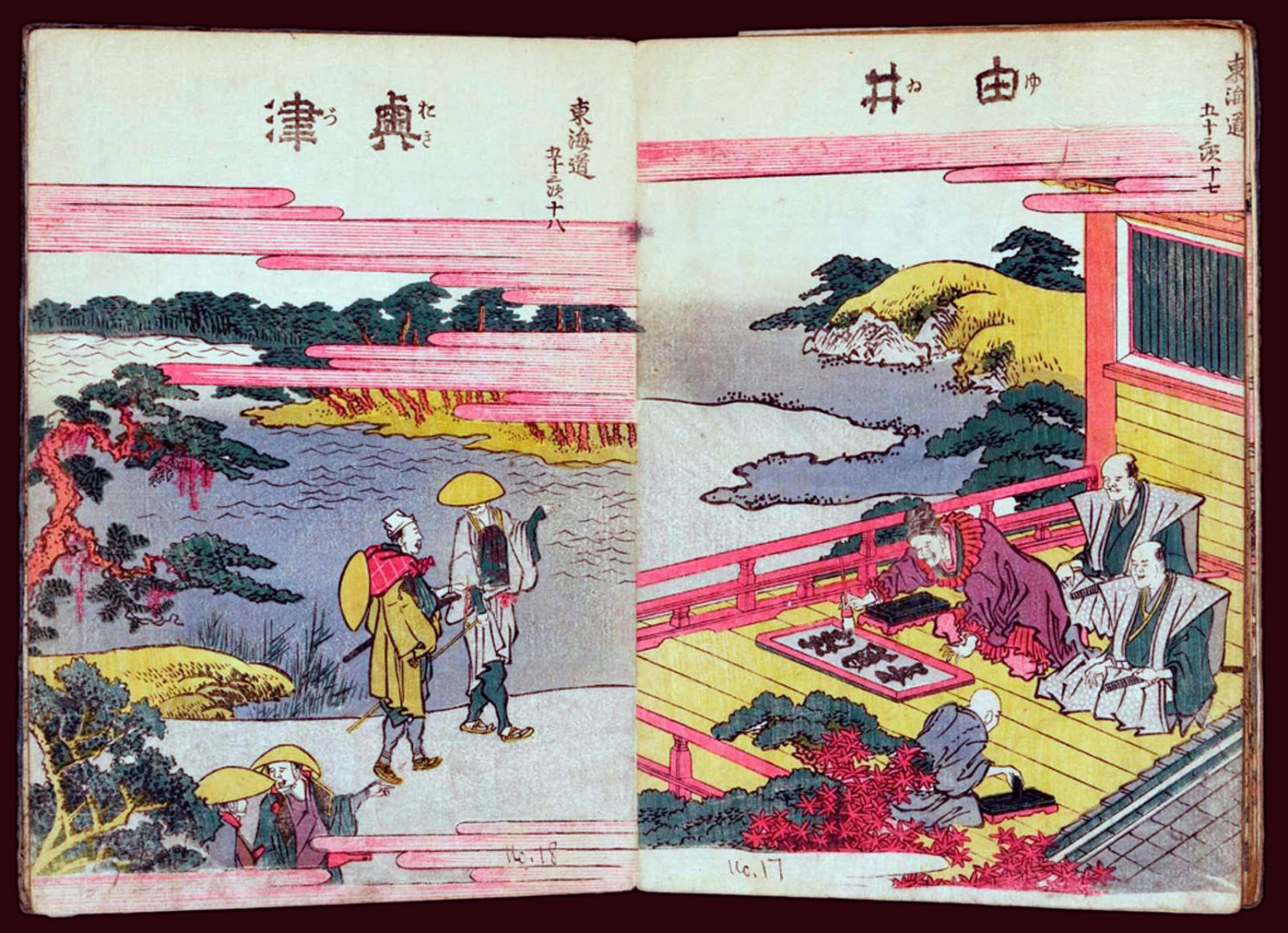
東海道五十三次 絵本駅路鈴
由井・興津
1806-10
葛飾北斎 画
伊勢屋利兵衛 刊
国立国会図書館蔵
北斎が描いた東海道シリーズの中の最も大きなサイズのものです。北斎が50歳の時刊行されたものと思われ、当時の旅行ブームを背景に、東海道の宿場を描いた浮世絵版画シリーズです。駅路鈴(えきろのすず)とは、古代の日本で公用の旅人が身分証明のために所持した鈴のことです。当初は個別の浮世絵版画として出版され、後に全図が揃った段階で、番号を振り本のような形に製本されて販売されました。
The Fifty-Three Stations of the Tokaido
Picture Book Station Bells
Yui / Okitsu
1806-10
Painting by Katsushika Hokusai
Published by Iseya Rihei
National Diet Library Collection
This is the largest format work within Hokusai’s Tokaido series. Believed to have been published when Hokusai was 50, this series of ukiyo-e woodblock prints depicts post stations along the Tokaido, reflecting the travel boom of the time. The “station bells” refer to bells carried by official travelers in ancient Japan as proof of identity. Initially published as individual ukiyo-e prints, the complete set was later bound into a book-like volume with numbered pages for sale.
豊広 東海道五十三次 Toyohiro 53 Stations of the Tokaido
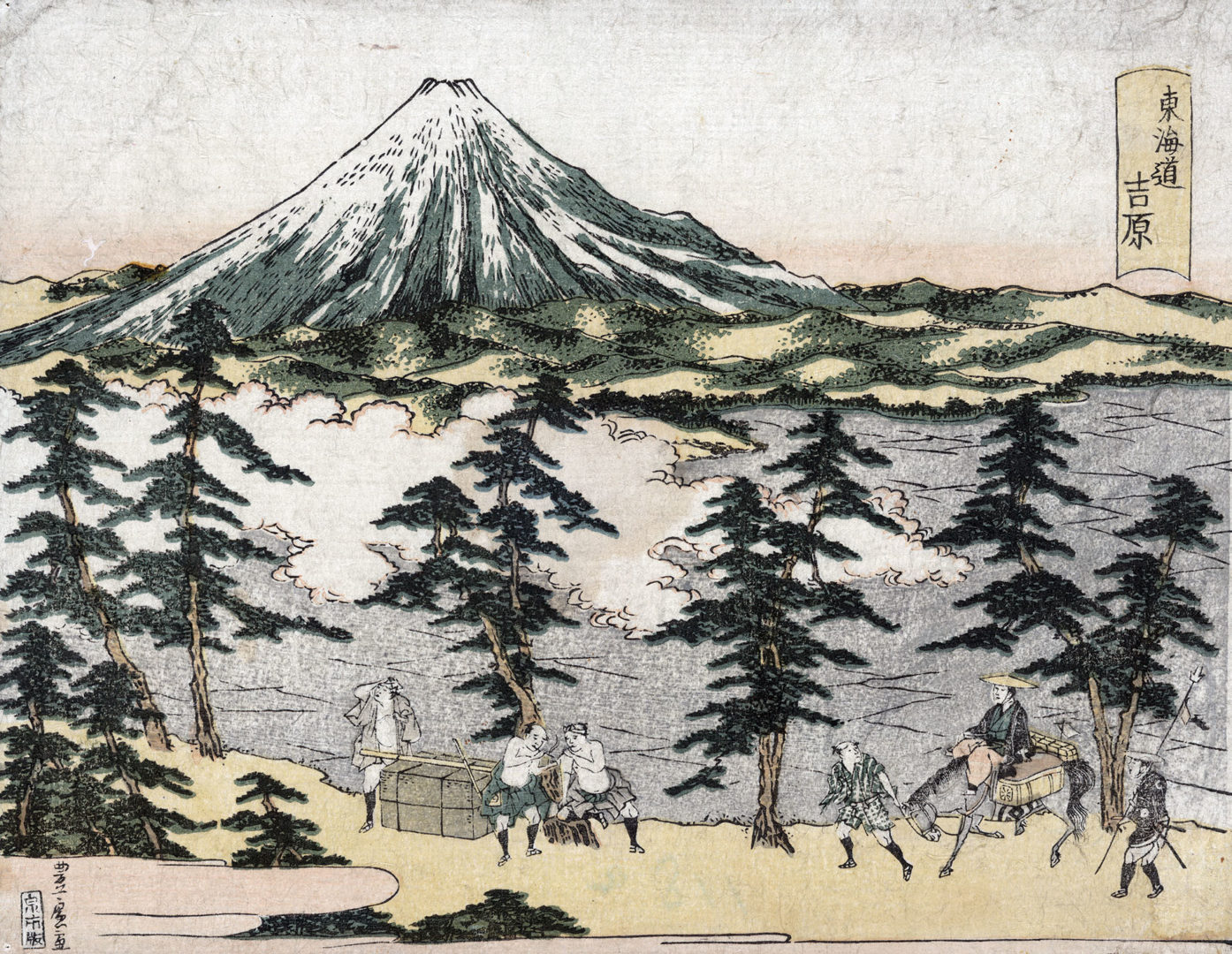
東海道五十三次
吉原
1803年
歌川豊広 画
和泉屋市兵衛 刊
アメリカ議会図書館蔵
廣重ははじめ歌川豊国に入門しようとしたものの、門弟が多く断られ、歌川豊広に入門しました。豊広は風景画を書いていたので、その影響を受け広重も次第に風景画を書くようになり、東海道五十三次に繋がっていきます。その師匠も五十三次を出版していたのですが、成り立ちを調べて見ても、詳しい資料は全く出てきませんでした。この吉原では、廣重は、左冨士を描いているのですが、師匠は富士山を正面からダイナミックに描いています。
Fifty-Three Stations of the Tokaido
Yoshiwara
1803
Painting by Utagawa Toyohiro
Published by Izumiya Ichibei
The Library of Congress Collection
Hiroshige initially sought to become a disciple of Utagawa Toyokuni, but was refused due to the large number of apprentices. He then became a disciple of Utagawa Toyohiro. Toyohiro specialized in landscape painting, and under his influence, Hiroshige gradually began creating landscapes himself, leading to the Tokaido Fifty-Three Stations series. While his master also published Fifty-Three Stations, no detailed records about its origins have surfaced despite research. In this Yoshihara print, Hiroshige depicts Mount Fuji from the left, whereas his master rendered Mount Fuji dynamically from the front.